 Eurolight

Lighting is an essential daily expense for every Nigerian household, shop, office and warehouse. However, most users face the same dilemma: cheap LED panel lights burn out quickly, suffer from frequent flickering, rapid brightness decay, and panel yellowing, while high-priced branded models bring unnecessary cost pressure. Coupled with Nigeria’s unstable grid power, year-round high temperatures and humid climate, ordinary standard LED panel lights cannot serve long-term and stably.
True cost-effectiveness never means the lowest one-time purchase price, but stable lighting, low power consumption, long service life, and zero frequent replacement costs. This tailored buying guide for the Nigerian market will break down professional selection standards, avoid common purchasing pitfalls, and help you pick high-value LED panel lights suitable for local usage scenarios.
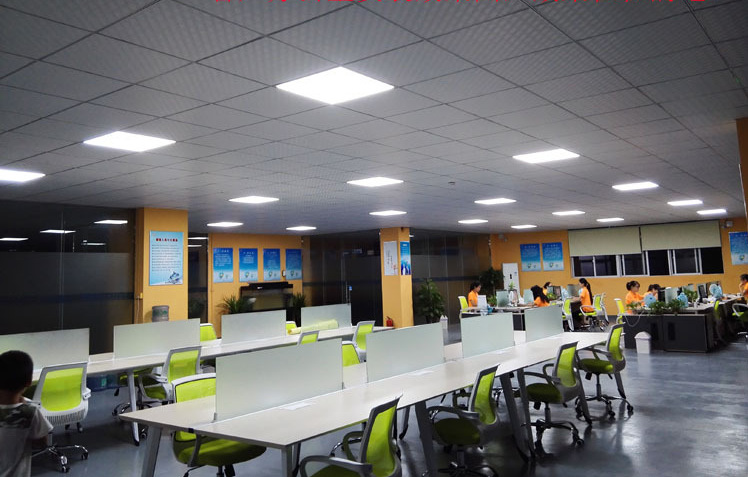
Why Ordinary Cheap LED Panel Lights Fail in the Nigerian Market
Most low-cost LED panel lights flooding local Nigerian markets are produced for European and American standard stable power and mild climate environments. They lack targeted optimization for Nigeria’s unique usage conditions, leading to extremely high comprehensive usage costs:
- Unstable grid voltage & frequent surges: Nigeria’s power grid often has voltage fluctuations, surge impacts and instantaneous power spikes. Ordinary plastic driving power supplies have no overvoltage protection, which are easily burned out, causing lights to flicker, dim or stop working completely.
- High temperature & humid aging damage: The hot and humid climate all year round makes lamp interiors prone to moisture ingress, resulting in mold on LED beads, internal short circuits, accelerated aging of light guide plates, and eventual panel yellowing and dark spots within several months of use.
- High hidden power consumption costs: Inferior panel lights adopt low-grade lamp beads with low luminous efficiency. To meet basic brightness requirements, they consume more power than qualified high-efficiency models, continuously increasing monthly electricity bills for families and businesses.
- No formal after-sales warranty: Most ultra-low-priced bulk products are unbranded and without official warranty. Once damaged, users have to bear all replacement and maintenance costs, forming a “cheap to buy, expensive to use” vicious cycle.
To sum up, the core principle of purchasing cost-effective LED panel lights in Nigeria is: local environmental adaptation comes first, and cost performance comes second.
6 Core Selection Standards for High-Cost-Performance LED Panel Lights (Nigeria-Specific)
You don’t need to pursue overpriced high-end models with redundant functions. As long as you check these 6 key configurations adapted to Nigeria’s power and climate, you can easily screen out durable and money-saving products.
1. Famous brand Anti-Surge Drive: Adapt to Unstable Local Power
The driving power supply is the core component of LED panel lights and the most failure-prone part in Nigeria’s power environment. Ordinary low-cost plastic drives have weak pressure resistance and cannot resist frequent voltage fluctuations.
Cost-effective pick: Prioritize products with aluminum alloy encapsulated constant-current drives and famous brands such as Philips, LiFud, Eagleries, Osram and BOKE etc. This configuration effectively resists voltage surges, avoids flickering and sudden shutdowns, greatly reduces failure rates under unstable power conditions, and is far more durable than ordinary plastic drive models with negligible price difference.
2. High Luminous Efficiency & Low Energy Consumption: Cut Long-Term Electricity Bills
The biggest advantage of LED panel lights over traditional fluorescent lamps is energy saving. For Nigerian users who need long-term daily lighting, high luminous efficiency is the most intuitive way to save costs.
Practical standard: Choose products with luminous efficiency ≥90lm/W. Under the same brightness, they save 30%-50% electricity compared with inferior low-efficiency lamps. For example, a 40W high-efficiency panel light delivers higher brightness than a 50W inferior product, realizing visible monthly electricity savings. Avoid products with ambiguous luminous efficiency parameters, which are mostly outdated low-energy-efficiency inventory.
3. Integrated Heat Dissipation & Moisture Resistance: Resist Local High Temperature and Humidity
Persistent high temperature and humidity are the main culprits for rapid light decay and short service life of panel lights in Nigeria. Poor heat dissipation causes LED beads to work in high-temperature environments for a long time, leading to dimming brightness and yellowed light panels in half a year.
Preferred configuration: The lamp body adopts integrated aluminum alloy heat dissipation frame (far better than thin iron frames and plastic frames in heat conduction), matched with high-transmittance anti-yellowing acrylic light guide plate. This structure achieves rapid heat dissipation and effective moisture insulation, fundamentally delaying lamp aging and extending service life.
4. High CRI & Reasonable Color Temperature: Comfortable for Long-Term Lighting
Low-quality cheap panel lights have a low color rendering index, causing distorted and dim colors of indoor furniture, commodities and clothing, which not only affects visual experience but also easily induces eye fatigue.
Universal matching scheme: Select CRI ≥80 products to truly restore real object colors, suitable for homes, retail shops and offices. For color temperature, 4000K natural white light is the most versatile, with soft and non-glare light for all-day indoor lighting; 6000K cool white light fits high-brightness demand scenarios such as warehouses, corridors and public passages. Ordinary scenarios do not need adjustable color temperature functions to avoid unnecessary cost waste.
5. Long Service Life & Complete Warranty: Reduce Replacement Frequency
The real cost performance is calculated by average daily usage cost. A cheap lamp replaced every 6 months is much less cost-effective than a durable lamp that works stably for 3-5 years.
Reliable standard: Nominal service life of no less than 25,000 hours, with official 2-5 year formal warranty. Regular manufacturer after-sales service eliminates frequent maintenance and replacement costs in the later stage. Never purchase unknown-brand bulk goods without warranty guarantees.
6. Standard Safety Certification: Eliminate Hidden Safety Risks
High-quality, cost-effective panel lights must pass basic safety certifications such as CE certification, with V-0 flame-retardant internal accessories. This design effectively prevents short circuits and fire hazards caused by humidity intrusion and voltage instability, ensuring safe use in families, commercial stores, and industrial venues.
Scenario-Based Precise Matching: No Waste of Money on Unnecessary Functions
Blindly buying high-power or multi-functional models will only increase costs. Targeted matching according to local usage scenarios is the highest cost-performance solution:
- Home (Bedroom & Living Room): 300-400cd/㎡ moderate brightness, 4000K natural white light, ultra-thin anti-glare design, soft and eye-friendly, no need for industrial high-brightness models.
- Retail Shop & Office: Prioritize high CRI (≥90) and uniform light emission, with high luminous efficiency and energy saving, adapting to 8-12 hours of long-time daily lighting to reduce operating electricity costs.
- Warehouse & Public Corridor: Choose basic durable models with high brightness, strong stability, high temperature and moisture resistance. Focus on practicality without pursuing fancy appearance and extra functions.
4 Common Purchasing Pitfalls in Nigeria’s Lighting Market
- Blind pursuit of ultra-low prices: Products far below the local market average price must cut corners on core materials (plastic heat dissipation, inferior lamp beads, no surge protection), resulting in extremely high later maintenance and replacement costs.
- Judging quality only by power wattage: High wattage does not equal high brightness. Inferior low-efficiency lamps only increase power consumption with no improvement in lighting effect, bringing pure cost waste.
- Choosing universal lamps ignoring local adaptability: Standard lamps for European and American markets lack anti-surge and moisture-proof design, and cannot adapt to Nigeria’s power and climate, prone to frequent failures.
- Purchasing without formal warranty: Unbranded bulk goods have no standardized after-sales service. All losses caused by product damage need to be borne by users themselves.
Core Buying Formula for the Most Cost-Effective LED Panel Lights in Nigeria
After adapting to Nigeria’s power grid and climatic characteristics, the one-stop high-cost-performance selection standard is clear: top brand anti-surge drive + aluminum alloy integrated heat dissipation + ≥90lm/W high luminous efficiency + CRI≥80 + 25000h+ long service life + 2-5-year official warranty.
This configuration abandons redundant premium functions, focuses on core practical performance suitable for the Nigerian market, realizes low long-term comprehensive usage cost, stable and safe lighting, and is the most cost-effective choice for local household and commercial lighting.
If you are looking for stable, power-efficient, and durable LED panel light solutions tailored for Nigeria, follow us for more professional local lighting purchasing tips and high-quality product recommendations!