 Eurolight

Nigeria has a large north-south span, with rainforests along the southern coast that are rainy and foggy; high-altitude grasslands in the central region; and severe Hamadan dust storms during the dry season in the northern Sahel region. The vast differences in water vapor, dust, and terrain openness in different regions directly determine the choice of color temperature (CCT) for LED streetlights. It is not recommended to use 6000K cool white light uniformly throughout the country.
Principle: High LED color temperature (≥5000K) has a high proportion of blue light, which is prone to Mie scattering when it encounters water vapor and dust particles, forming a light curtain glare and reducing the effective viewing distance; 3000-4000K neutral/warm white light has less blue light and better penetration in rain, fog and dusty environments; the lower the color temperature, the better the penetration, but if it is too low (<2700K), the color resolution becomes worse, which is not conducive to the identification of pedestrians, vehicles and road signs.
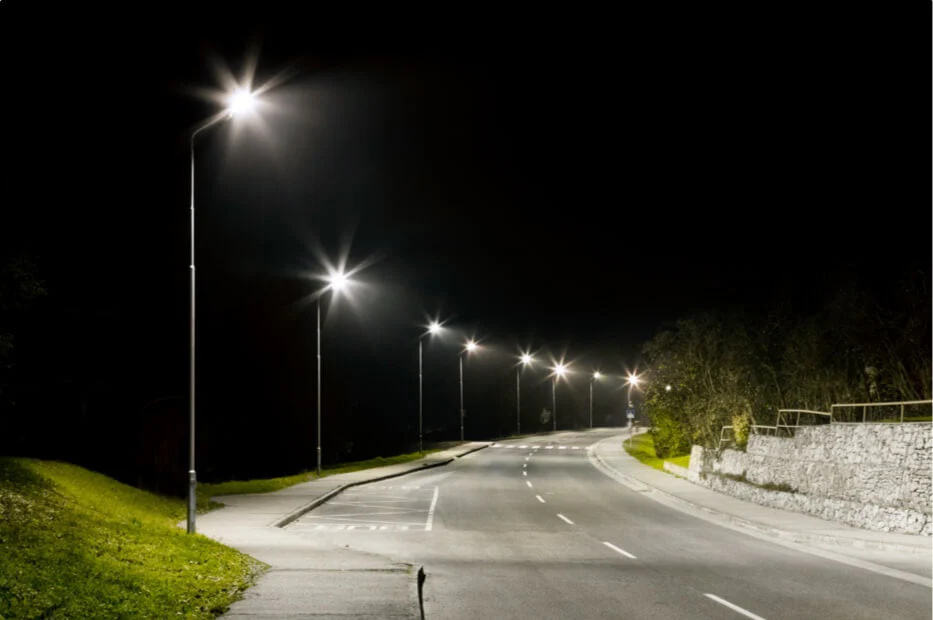
The Influence of Nigerian Climate Conditions on Color Temperature
1) Southern Coastal Area and Niger Delta (Tropical Rainforest/Tropical Monsoon)
Climate: Long rainy season (April-October), humidity 80-90%, frequent rainfall, frequent morning sea fog, extremely high air moisture content; high temperature and humidity year-round.
Lighting Pain Points: On rainy nights and foggy days, high color temperature cool white light is easily scattered by water vapor, resulting in a white, glare-filled road surface and severe glare, making it difficult for drivers to see the road.
✅Recommended Color Temperature: 3000K-3500K (Warm White) The upper limit for urban main roads should not exceed 4000K; 5000K and above cool white light are strictly prohibited.
Advantages: Reduces water vapor scattering, reduces glare on rainy nights, and ensures visibility for vehicles in rainy weather; CRI≥75, ensuring the recognition of road signs and pedestrian clothing colors.
2) Central Region (Abuja, Jos Plateau, Tropical Savannah)
Climate: Distinct rainy and dry seasons; abundant rainfall during the rainy season; the dry season is affected by the Hamadan dust storm, resulting in a large amount of fine dust suspended in the air; greater diurnal temperature variation on the plateau, undulating terrain, and fog in some valleys.
Lighting Challenges: During the dry season, the Hamadan dust storm creates a dense atmosphere with high levels of suspended particulate matter, causing blue light scattering and glare; the rainy season brings localized short-term heavy rain and fog.
✅Recommended Color Temperature: 3500K-4000K (Neutral White, the most commonly used range for projects throughout Nigeria.
Balancing the penetrating power in dusty environments while ensuring sufficient color visibility, suitable for urban main roads, suburban highways, and rural roads; For foggy sections in the Jos Plateau valleys, the color temperature is lowered to 3200-3500K.
3) Northern Sahel Region (Kano, Borno, and other northern cities)
Climate: Short rainy season, long dry season; Hamadan experiences the strongest dust storms from November to February each year, resulting in hazy air and frequently reduced visibility; little rainfall, dry air, mostly sunny days, and very little dense fog, but persistent dust storms are the norm.
Lighting Pain Points: The pervasive dust scatters high color temperature blue light, creating a whiteout curtain that reduces visibility.
✅Recommended Color Temperature: 3500-4000K; maximum 4500K for highways and main roads.
Note: Many exporters habitually supply 6000K lights to Africa, but in Hamadan during the northern season, the actual lighting effect is very poor; the lights appear bright, but the effective visibility on the road surface is significantly reduced.
The supplementary constraints of topography and landforms on color temperature
The southern delta is a low-lying plain (flat and low-lying, prone to fog during the rainy season, and crisscrossed by rivers).
The terrain is flat, and water vapor does not easily disperse, so fog remains on the ground. Priority should be given to areas between 3000-3500 km/h; in residential areas and along village roads, 3000 km/h is the direct reference point.
Central plateau and hilly terrain (Jos Plateau, eastern Cameroon border mountainous area)
Localized fog is prone to form in low-lying areas of valleys; fog is absent on open plateau surfaces.
Valley bends and sections near water: 3200-3500K; Open plateau main roads: 3500-4000K.
The northern Sahel plain offers extremely wide-open views.
The view is wide and unobstructed, but there is often dust; avoid using a 5000K+ lens, as blue light scattering in dusty environments can cause glare at long distances, interfering with oncoming vehicles.
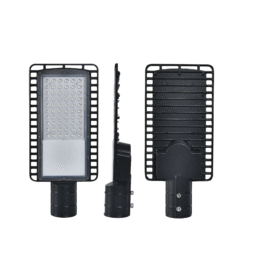
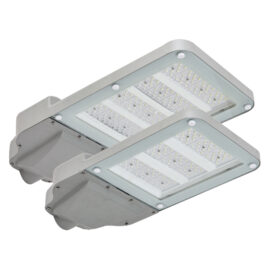
What Color temperature is the best ?
| Road Types | Recommended Color temperature | Remark |
| Municipal and village roads in the southern coastal/delta region | 3000K-3500K | Frequent rain and fog; avoid frequencies above 5000K. |
| Main roads in central cities and rural highways | 3500K-4000K | Mainstream Project Selection of Solar Street Lights in Nigeria |
| Northern cities, Sahel region highways | 3500K-4000K | To deal with Hamadan dust, 6000K is not recommended. |
| Valleys, waterside areas, and low-lying sections prone to fog | 3000K-3500K | Enhanced penetration of rain, fog, and sandstorms |
| Residential areas, pedestrian streets | 4000K-4500K | Reduce light pollution and minimize nighttime disturbances to residents. |
| Expressway/High-grade highway (only open, fog-free sections in the central and northern regions) | Prohibit>5000K |
Conculsion
Avoid large-scale use of 6000-6500K cool white light: While it may appear bright to the naked eye on sunny days, severe blue light scattering occurs during Nigeria’s rainy season fog and the Hamadan dust storm season in the north, reducing actual driving safety. Many projects in Africa have encountered problems with this
Color temperature and CRI: For LED road lighting, a CRI ≥ 70 is recommended; for urban roads, a CRI ≥ 80 is suggested. Focusing solely on color temperature without considering the CRI can lead to situations where the light color is suitable but pedestrians and vehicles are indistinguishable.
Light distribution and color temperature linkage: Even low color temperature luminaires should have proper light cutoff to control light overflow and reduce road glare. Don’t rely solely on color temperature; optical design is equally crucial.
Market situation: Many inexpensive solar streetlights on the market default to 6000K. For projects in Nigeria, it is essential to explicitly specify 3500-4000K when ordering; do not accept the default 6000K configuration.
For Nigeria, the optimal general-purpose light selection is 3500-4000K neutral white; in the rainy and foggy south, and in valleys and low-lying areas, the light selection should be reduced to 3000-3500K; long-term and large-scale use of cool white light above 5000K is not recommended in any region.