 Eurolight

If you’ve ever shopped for an LED panel light in Nigeria, you’ve probably noticed something confusing: two lights that look almost identical can have prices that are poles apart. A 6W LED panel light can cost as little as ₦1,800, while a 96W LED panel light might set you back ₦17,500 or more. So what’s really going on behind those price tags? The answer is more complex than you might think.
The Nigerian Lighting Market at a Glance
Nigeria‘s LED lighting market is experiencing remarkable growth. The country’s LED Lighting & Smart Systems market is valued at approximately USD 1.2 billion, driven by increasing urbanization, energy efficiency initiatives, and a growing demand for sustainable solutions. With a projected compound annual growth rate (CAGR) of around 6.9% through 2033, the market’s expansion shows no signs of slowing.
Yet, the market is deeply divided. On one hand, nearly 43% of Nigerians remain off-grid, creating huge demand for basic solar lighting products. On the other hand, modern buildings in Lagos and Abuja increasingly seek out smart lighting and high-end commercial LED solutions. This dual reality has created a pricing landscape in which the same type of product can sell for drastically different prices.
Why LED Panel Light Prices Vary So Widely in Nigeria?
1. The Hidden Driver of Price: LED Driver Quality
One of the most significant—and most overlooked—factors affecting LED panel light prices is the LED driver, sometimes called the ballast. This small component is the heart of the light, regulating power to the LEDs.
High-quality panel lights are equipped with drivers that provide wide voltage tolerance (typically 220–240V) and include protection against voltage spikes, overcurrent, and overheating. Given the frequent power fluctuations common in Nigeria‘s electricity grid, a good driver is not a luxury—it’s a necessity. Units with robust drivers can outlast unprotected versions by 50% to 100% in typical Nigerian home and office settings.
Cheaper alternatives often cut corners here, using low-grade drivers that fail quickly when exposed to unstable power. The result? The initial savings disappear when the light stops working weeks or months later.
2. Tariff and Import Cost Advantage
A major factor behind LED panel light price differences comes down to how the products are imported.
The Nigerian government has created a clear tariff structure to encourage local assembly of lighting products. LED components (drivers, LED chips, and housings) imported as SKD (Semi-Knocked Down) kits or CKD (Completely Knocked Down) parts attract an import duty of only 10%. Finished LED panel lights, however, are subject to a higher duty of 20%.
This 10% tariff gap is significant. Importers who bring in fully assembled lights pay double the duty, and that extra cost inevitably reaches the end consumer. Savvy importers who bring in parts for local assembly can offer more competitive LED panel light prices in Nigeria. Moreover, companies operating in zones like the Ogun Free Trade Zone can also benefit from 5-year tax holidays, which further reduces operational costs and improves their ability to offer lower prices
3. The Role of Brand Reputation
Another major contributor to price variation is brand recognition. In Nigeria’s lighting space, established brands such as Eurolight, Philips, and Osram have built strong market reputations. According to a comparison study from EnergyMall Nigeria, Eurolight products are widely recognized for their energy efficiency, innovative designs, and dependable customer support, making them an attractive option for consumers. Philips is known for its smart lighting solutions, including app-controlled and voice-activated panel lights. These brands invest heavily in marketing, quality assurance, and after-sales service—costs that are included in the price.
On the other hand, a huge volume of unbranded LED panel lights in Nigeria is imported directly from Chinese factories, often through smaller distributors. These products may look similar on the outside, but they often skimp on internal components, customer support, and long-term durability. The lower retail price reflects the absence of brand-related expenses and the lack of any service commitment after purchase.
4.Components, Materials, and Build Quality
The physical construction of the light matters just as much as the electronics. The light guide plate, for example, is a critical component in LED panel lights. High-quality light guide plates made from superior materials ensure uniform illumination across the entire panel, whereas poor-quality light guide plates produce uneven, patchy light. The choice of materials for the housing also affects heat dissipation, which directly determines LED lifespan.
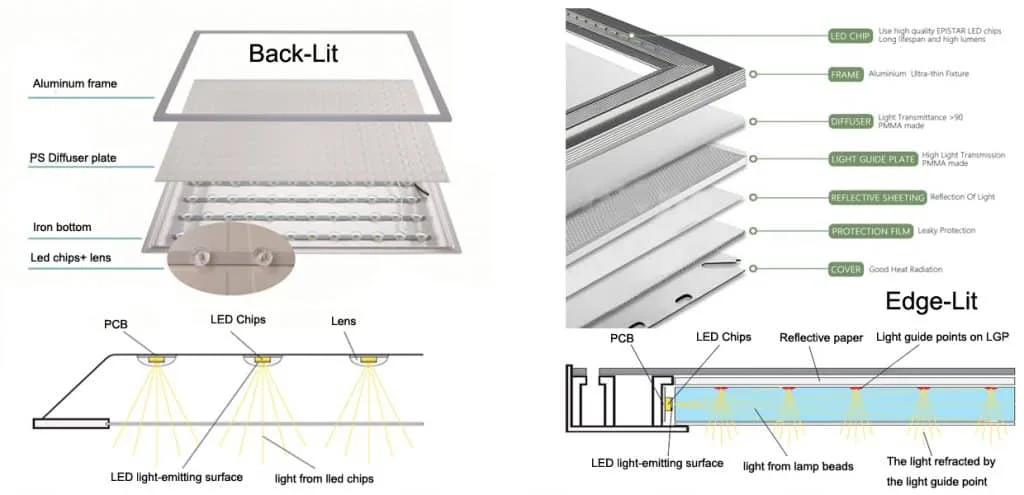
Other specifications that influence price include:
Color Rendering Index (CRI): High-quality LED panel lights often have a CRI of 80 or higher, producing accurate and natural colors. Lower-quality units typically have poor CRI values, resulting in dull and distorted color rendering.
Color Temperature Options: Quality lights offer multiple color temperature settings (warm white, neutral white, cool white) to suit different applications.
Warranty Period: Premium brands often offer extended warranties of 2-5 years, while no-name brands provide little to no warranty coverage.
5. Supply Chain and Distribution Channels
The distance a light travels before reaching you also impacts its price. Many LED panel lights sold at retail in Lagos have passed through three or more intermediaries: first the Chinese manufacturer or exporter, then a major Lagos importer, then a regional wholesaler, and finally a local retailer or online marketplace. Each link in this chain adds a markup. Buying directly from importers or through platforms like Konga and Jumia can often secure better prices than purchasing through small neighborhood stores. However, consumers should be mindful that online pricing varies widely; for example, some 40W 600×600 LED panel lights are listed at ₦17,500, while other models with similar wattage can be found at much higher or lower price points.
How to Make the Right Buying Decision
Given the wide variation in LED panel light prices in Nigeria, how do you get the best value?
For Commercial Buyers and Contractors
If you are purchasing for an office, hotel, or government project, prioritize certified products from reputable brands like Eurolight, Osram, or Philips. Also consider suppliers who offer warranties of at least 2 years. A higher upfront cost will be offset by lower failure rates, better illumination quality, and fewer maintenance call-outs
For Homeowners and Small Businesses
If you are buying for personal use, consider the total cost of ownership rather than just the initial price. A higher-quality light with a good driver may cost twice as much upfront, but if it lasts five years instead of one, you come out ahead. Look for products with a good brand LED driver, a decent warranty, and positive customer reviews that specifically mention durability under Nigerian electrical conditions.
For Importers and Distributors
If you are looking to import LED panel lights for resale, the tariff advantage for SKD and CKD components presents a clear opportunity. By importing components rather than fully assembled units, you can reduce your landed cost by approximately 10%, allowing you to offer more competitive wholesale prices to Nigerian retailers. Additionally, ensure that all products are directly from a reliable LED panel lights manufacturer in China or other countries.
Practical Guide to Installing LED Panel Lights in Nigeria
Once you’ve purchased the right product, proper installation is key. For recessed mounting, measure and cut the ceiling opening, secure the clips, wire the driver to the mains (ensuring the power is off), and snap the panel in place. For surface mounting, attach the mounting brackets directly to a solid ceiling with screws, then click the panel into the brackets. Always use a licensed electrician, especially for commercial projects, to ensure compliance with safety regulations.
Final Thoughts
The next time you see two similar-looking LED panel lights with dramatically different price tags, remember: it is rarely the product itself that determines the final cost. Instead, it is the combination of driver quality, import structure (SKD vs. finished goods), brand reputation, component materials, and distribution channel. By understanding these hidden factors, you can stop focusing solely on the sticker price and start focusing on real value.
Nigeria‘s LED lighting market is set to keep growing rapidly as urbanization continues and energy efficiency becomes a national priority. A well-chosen LED panel light isn’t just a purchase—it is an investment in better lighting, lower electricity costs, and fewer replacement headaches down the road.